錦町虎舞
にしきちょうとらまい
Nishiki-cho Toramai|Nishiki-cho Youth Association
団体名 : 錦町青年会
所在地 : 岩手県釜石市 釜石
種別 : シシ芸
錦町虎舞は、門前虎舞と称したが町名の変更により錦町となり、現在は浜町3丁目となっているが、前町名のまま「錦町虎舞」と呼称しています。
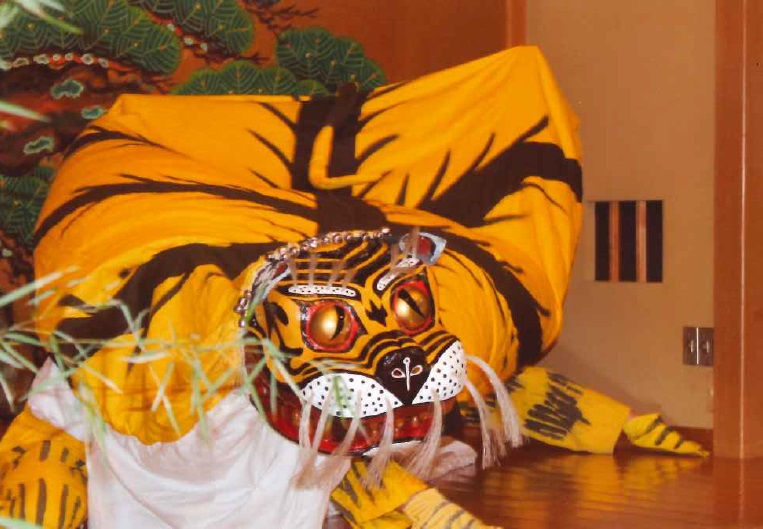
虎頭も古昔は権現頭を虎様に彫刻したものを使用していたが、大正期に門前居住の藤沢高一氏により工夫製作された張り子製となりよりリアルなものに変化し、軽くて自由に虎頭を動かせることにより、舞が活発勇壮に踊るようになったと同町の虎舞の長老故澤田長助氏は語っていました。
舞歴としては、毎年10月の尾崎祭、6月の綿津見祭の祭礼供奉の他、各種芸能大会で披露されています。
錦町虎舞は市内虎舞団体の中でも重厚で内容豊かな代表的団体といわれている。その他として刺鳥舞、狐獲り、おかめ漫才、御祝、甚句等も伝承されていました。
市の無形文化財、「釜石虎舞」の一つです。
The Nishiki-cho Toramai was once called the Monzen Toramai, but with the change in the town’s name, it became the Nishiki-cho Toramai. Even now that the town’s name has changed to Hama-cho 3-chome, the name remains unchanged.
The tiger head was originally carved in the shape of a tiger based on the Gongen head, but during the Taisho era, Mr. Koichi Fujisawa, a local resident, innovated and crafted papier-mâché tiger heads, resulting in a more realistic design. The lighter weight and greater mobility of the tiger head allowed freer movement, making the dance livelier and more vigorous, according to the late Nagasuke Sawada, an elder of the Toramai troupe in the area.
The dance is performed at the Osaki Festival in October and the Watatsumi Festival in June, as well as at various other performing arts events.
Nishiki-cho Toramai is considered one of the most representative and richly contented tiger dance groups in the city. Other traditional performances such as Sashitori Mai, Kitsune Dori, Okame Manzai, Celebratory Dances, and Jinku songs had also been passed on. Nishiki-cho Toramai is a component of the Kamaishi Toramai, an intangible cultural asset of the city.